In early December, my older sister was flying back to France, which gave me a good excuse to spend a few days at home with my family. It also turned out to be the perfect opportunity to put two new lenses through their paces: the Zeiss Distagon 21mm f/2.8 and the Zeiss Makro-Planar 50mm f/2. I had picked them up as early Christmas presents to myself after finding both at a relatively good price — something that doesn’t happen often with Zeiss glass.
For some time, I’ve been flirting with the idea of getting into Leica film cameras. However, the cost — even for an entry-level Leica M3, and especially once lenses are factored in — always felt hard to justify. That pushed me to look more seriously at alternatives that could offer comparable optical performance without the same financial commitment.
Comparing MTF charts was a good starting point. On paper, the Zeiss Makro-Planar 50mm sits neatly between the Leica 50mm Summicron and the Summicron ASPH in terms of performance. The story is similar at the wide end: the Zeiss Distagon 21mm f/2.8 appears to match the Leica Elmarit-M 21mm ASPH for sharpness and overall optical quality.
This naturally raised the question of whether these Zeiss lenses could satisfy my desire for a high-performance, relatively lightweight analogue photography setup — while also avoiding the rangefinder system and the practical limitations it can introduce, particularly when working with wide-angle or telephoto lenses.
At this point, my interest in a lightweight camera setup feels well and truly satisfied. This combination has already proven itself through the images it produces and stands, without hesitation, as a highly convincing alternative to more expensive systems.
With the new lenses mounted, I began by shooting close to home, simply walking around the yard and getting a feel for how they handled in familiar surroundings.
As usual, my father was in the middle of working on his tractor — this time converting it to four-wheel drive. While I know very little about tractors myself, it felt like exactly the kind of scene where the 21mm wide-angle lens would shine. The wider field of view allowed me to include more of the environment and context, rather than isolating details, which suited both the subject and the moment.
All of these images were developed using a new development workflow I’ve been refining specifically for Agfa Copex Rapid. When used on its own, POTA produces a very pleasing tonal range with this film, but it struggles to fully remove the anti-halation underlayer (AHU). The result is often visible artefacts, particularly in areas of open sky.
In earlier experiments, I tried using a sodium carbonate pre-bath, but the results were never fully convincing. While it helped address the AHU layer, it consistently reduced resolution, leaving the negatives looking soft and lacking fine detail.
That changed about a month ago, when I replaced the carbonate pre-bath with a very weak Rodinal pre-bath. When followed by POTA development, this combination has proven to be far more effective. To my eye, it preserves resolution while delivering smoother tonality and cleaner skies — some of the most satisfying results I’ve managed to extract from Copex Rapid so far.
The next photograph was taken during a walk around the village, continuing these early tests in everyday surroundings.
The following day, we decided on a family outing and headed to Zermatt, taking the train up to the Gornergrat Observatory. While the journey is a long one, it offers spectacular views along the way and allows everyone to experience the alpine landscape without the physical demands of a long hike.
It had been some time since my last visit to Zermatt — around three years earlier, during a summer hiking trip. That journey remains memorable for another reason as well. Just before leaving, I had bought my Nikon FM2, meeting the seller in a parking lot in Marseille. He arrived on a motorcycle, carrying what appeared to be the final pieces of his late father’s belongings. The camera came with a quiet sense of history attached, and returning to Zermatt with it in hand felt like closing a small circle.
To reach Zermatt, we first took the train from Täsch, where long-term parking is located. As Zermatt is a car-free, pedestrian-only town, the train is the only way to enter the village, making the journey itself part of the experience.
This photograph was taken of my sister while we were still on the train. After arriving at Zermatt Bahnhof, we boarded a second train bound for the Gornergrat Observatory. The cogwheel journey takes around 30 minutes, climbing from roughly 1,500 metres to over 3,100 metres above sea level.
The rapid gain in altitude was noticeable — enough to leave me with a mild headache — but it was a small price to pay for the views unfolding along the way.
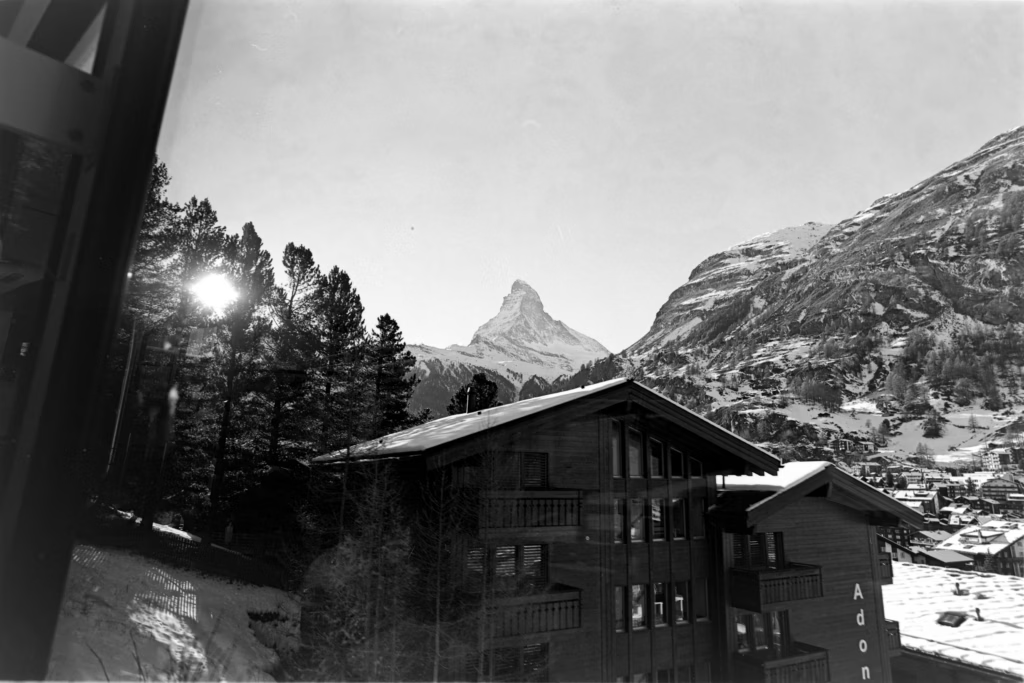
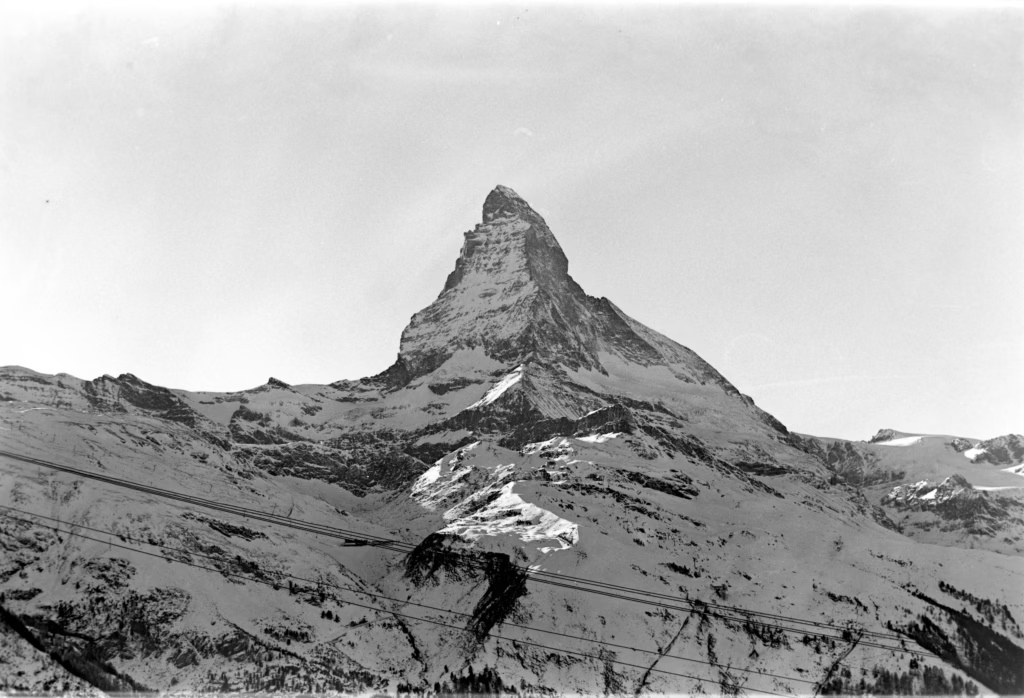
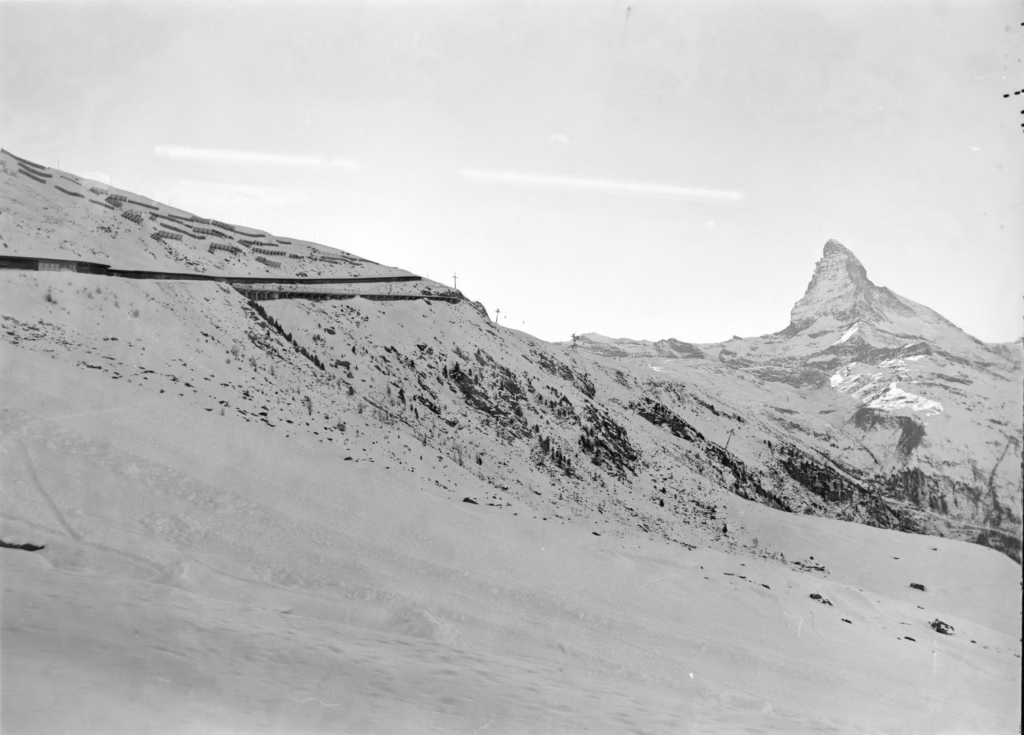
Upon arriving at the Gornergrat Observatory, you’re immediately greeted by an impressive view of the Matterhorn — a mountain instantly recognisable from its appearance on Toblerone chocolate packaging. Beyond its iconic silhouette, however, the Matterhorn is a notoriously serious and demanding climb, with accidents reported almost every year, serving as a reminder of the scale and severity of the alpine landscape.

Following this path leads to a lift that takes you up to a terrace, where you can sit down and enjoy Swiss raclette while taking in the mountain views.

Here is a view of the Matterhorn that also includes the terrace. This is one of the few shots I took with the 50mm Makro-Planar rather than the 21mm Distagon.

I’m quickly growing accustomed to working with wide-angle lenses. For everyday shooting, they offer far more flexibility than a standard 50mm, allowing scenes to breathe and include more context. Since picking up the 21mm, it has been almost permanently mounted on my Nikon FM2. Paired with the high resolving power of Agfa Copex Rapid, the combination has delivered results I’ve been consistently happy with.
Leave a Reply